Ancestral Practice · 8 min read
How to Honor Your Ancestors This Fall: Altar Ideas and Simple Rituals
By China · October 1, 2026
You're digging through a kitchen drawer looking for a measuring cup when you find an index card wedged in the back. It's your grandmother's handwriting. Sweet potato pie. At the bottom, in pencil, she wrote "a little more nutmeg than you think."
You stand there longer than you meant to. You can almost hear her saying it.
That feeling is where honoring your ancestors starts. Most people picture candles and a big altar when they hear the phrase, and those can be lovely. But most of this work is simpler. It means remembering the people you come from, on purpose.
Fall is a natural time to start. Here's why late October is known as ancestor season, how to set up a simple ancestor altar, and small ways to honor your people if an altar isn't your thing.
The short answer: You can honor your ancestors by saying their names, telling their stories, cooking their recipes, or setting up a small altar with their photos and things they loved. Late October into early November is a traditional time for it, around Samhain, Día de los Muertos, and All Souls' Day. You don't need special tools or experience. You just need to remember them on purpose.
Why do people honor their ancestors in the fall?
A lot of cultures set aside the end of October and the start of November for the dead.
- Samhain (October 31 into November 1) is a Gaelic festival that marks the end of the harvest and the start of winter.
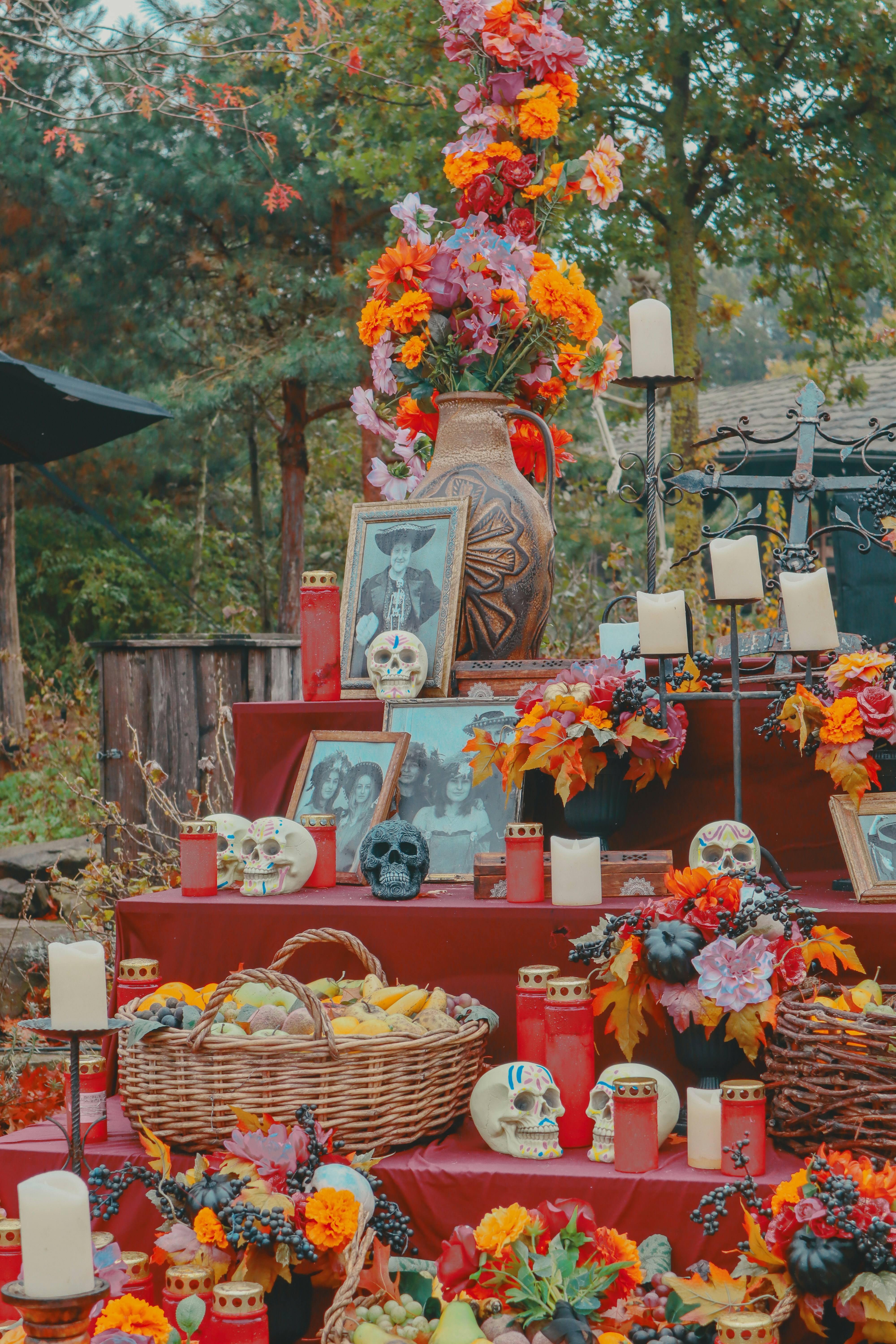
- Día de los Muertos (November 1 and 2) is celebrated in Mexico and by Mexican families all over the world. Families build ofrendas, or offering altars, to welcome their loved ones home.
- All Souls' Day (November 2) is when many Christians, especially Catholics, pray for those who have died.
Fall isn't the only time, though. In Japan, families honor their ancestors during Obon in the summer. In China, Qingming in early April is a day for tending family graves. You can honor your people any day of the year. Fall just happens to be when a lot of us feel them closer.
What does "the veil is thin" mean?
You'll hear people say the veil is thin this time of year. The idea comes from Samhain. In old Gaelic belief, the boundary between this world and the otherworld was thought to be at its thinnest that night, so spirits could cross over more easily.
Today, people use the phrase to describe a season when the dead feel closer. Maybe you dream about your grandfather more in late October. Maybe a song comes on the radio and you have to pull the car over. Whatever you believe is happening, those moments deserve your attention.
This year, ancestor season also overlaps with Mercury retrograde in Scorpio, which only adds to that look-back feeling.
How to set up an ancestor altar
An ancestor altar is a dedicated spot where you keep photos and objects that connect you to the people who came before you. There's no single right way to build one. Here's a simple place to start.
- Pick a spot. A shelf, a dresser top, a corner of the kitchen counter. Choose somewhere you'll see every day, where it won't get knocked over.
- Clean it first. Wipe it down and clear the clutter. It's a small way of saying this space matters.
- Add photos of people who have passed. Many people keep photos of the living off an ancestor altar, so the space stays for those who have died.
- Add something they loved. Grandpa's reading glasses. Your aunt's rosary. A deck of cards, a favorite mug, the coffee brand she always bought.
- Add light. A candle is traditional. If you light a real one, never leave it burning when you leave the room. A battery candle works just as well.
- Add water. A glass of water is one of the most common offerings. On a Día de los Muertos ofrenda, it's there to quench the thirst of spirits after their long trip home.
- Add flowers. Bright orange marigolds are used on ofrendas because their color and scent are believed to guide spirits home. Any flowers your loved one liked will work.
- Add food or drink they enjoyed. Swap it out before it spoils.
Then spend a minute there. Say good morning. Say their names. That's the part that matters most.
If you're borrowing from a tradition that isn't your own, like the ofrenda, take a little time to learn where it comes from. Respect goes a long way.
Ancestor altar ideas for small spaces
If you live in a small apartment or share a home with people who might not get it, your altar can be tiny.
- A single framed photo and a tea light on a windowsill
- A small box of keepsakes you open when you want to sit with them
- A recipe card taped inside a kitchen cabinet
- A piece of their jewelry you wear on days you want them close
- Their favorite book on your shelf, with a photo tucked inside
Simple ways to honor your ancestors without an altar
An altar is one way to do this. There are plenty of others.
- Cook their food. Make the dish they were known for, and tell the story behind it while you eat.
- Say their names out loud. At dinner, before bed, or on the drive to work.
- Ask your elders. Call the oldest person in your family and ask what their grandparents were like. Write down what they tell you.
- Visit the grave. Clean the headstone, bring flowers, and sit for a while.
- Learn your family history. Public records, old letters, and family Bibles can fill in names you never knew.
- Carry something forward. Keep a tradition alive, whether it's a holiday custom, a language, a song, or a skill they passed down.
- Write them a letter. Tell them what's going on in your life. You don't have to send it anywhere.
A simple Samhain ancestor ritual
If you'd like to mark the night of October 31 in a quiet way, here's a simple version anyone can do. It isn't an ancient rite. It's just a way to make some space.
- Turn off the TV and put your phone in another room.
- Light a candle near a photo of someone you've lost.
- Say their name out loud, and share one thing you remember about them.
- Sit quietly for a few minutes. Notice what comes up, whether it's a memory, a feeling, or nothing at all.
- If there's something you never got to say, say it now or write it down.
- Thank them, and blow out the candle.
That's it. Some years it'll feel big. Some years it won't. Both are okay.
What if your family history is painful?
Not every family story is a warm one. Maybe someone in your family caused real harm. Maybe you were adopted and don't know your birth family. Maybe your people were pushed off their land, and the stories and records were lost along the way.
Honoring your ancestors doesn't mean you have to honor everyone. You get to choose who goes on your altar. You can honor the grandmother who protected you and leave out the person who hurt you. You can honor ancestors further back, the ones who survived so you could be here, even if you'll never know their names. You can honor the people who raised you or shaped you, even if you don't share their blood.
I've written about how it feels to long for a place that no longer exists. If that's where you are right now, this kind of work can be part of finding your way back, slowly and on your own terms.
When to get support with ancestor work
A lot of this you can do on your own, at your kitchen table. But sometimes what comes up is bigger than a candle and a photo. Grief that hasn't moved. Questions about where you come from. A feeling that someone is trying to reach you.
If that's you, you don't have to sort through it alone. An Ancestral Transpersonal Journey session is built for focused ancestor work. If you're carrying a lot at once, The Soul Session gives you more room to talk it through.
And if grief is making it hard to get through your days, please reach out to a grief counselor or therapist too. Spiritual support and professional support can go hand in hand.
Ancestor altar FAQ
What do you put on an ancestor altar?
Most ancestor altars include photos of loved ones who have passed, a candle, a glass of water, and something they loved, like food, flowers, or a personal object. Start simple and add to it over time.
Can you put photos of living people on an ancestor altar?
Many people don't. The usual practice is to keep the altar for those who have died. If you want to honor living family too, give them a separate spot.
How long should you keep an ancestor altar up?
As long as you want. Some people keep one all year. Others set one up for the season, from late October through early November, and take it down after.
Do you have to be religious to honor your ancestors?
No. People of every faith, and people with no faith at all, honor their ancestors. Remembering where you come from belongs to everyone.
When is Samhain?
Samhain is traditionally celebrated from the evening of October 31 into November 1.
When is Día de los Muertos?
Día de los Muertos is celebrated on November 1 and 2. Many families start setting up their ofrendas in the last days of October.
Back to the recipe card
You could put that card in a frame. You could tape it inside a cabinet. Or you could make the pie this November, with a little more nutmeg than you think, and tell whoever's at the table about the woman who wrote it.
Any of those counts. What matters is that she's remembered, and that you're the one doing the remembering.